
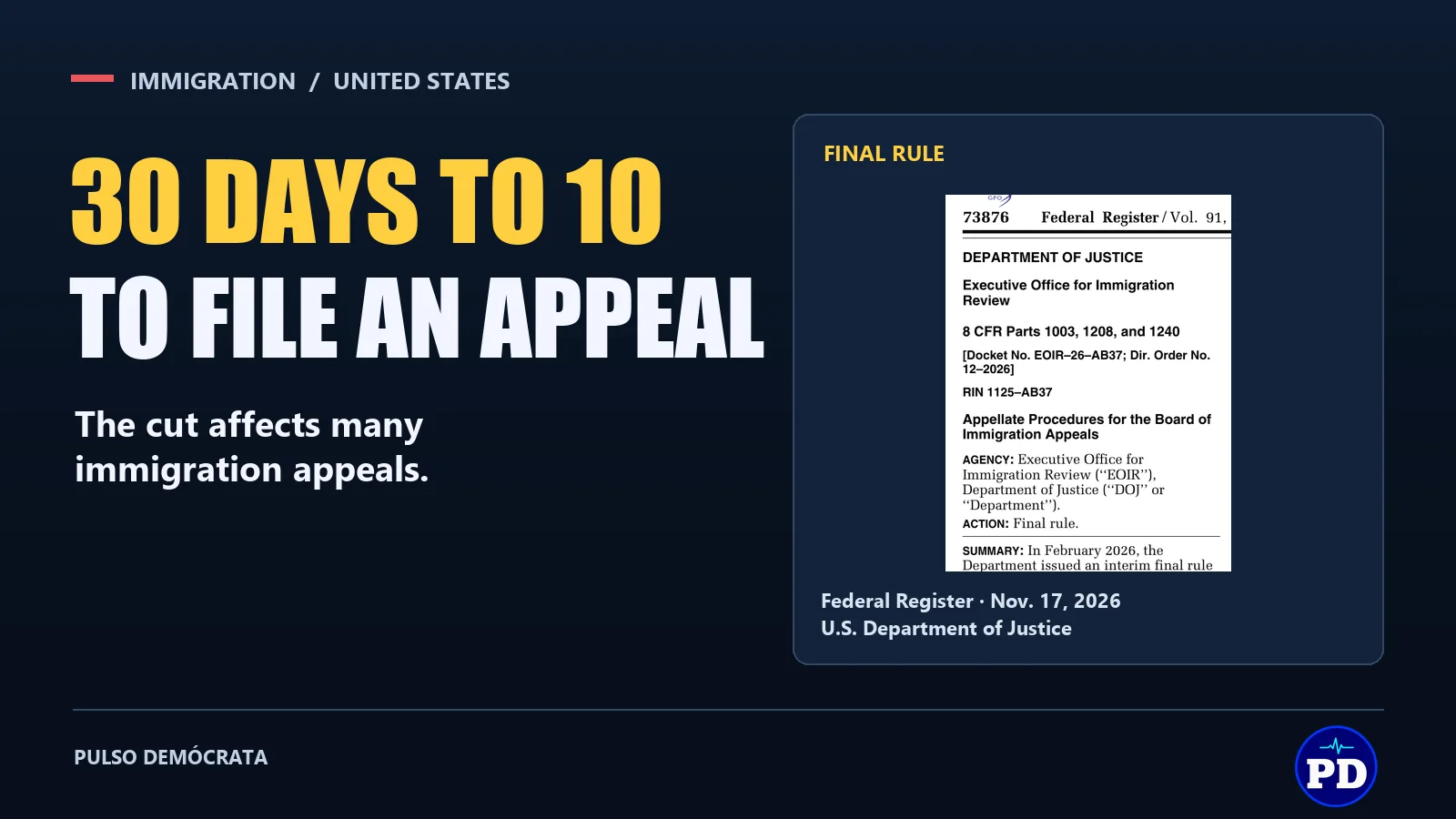
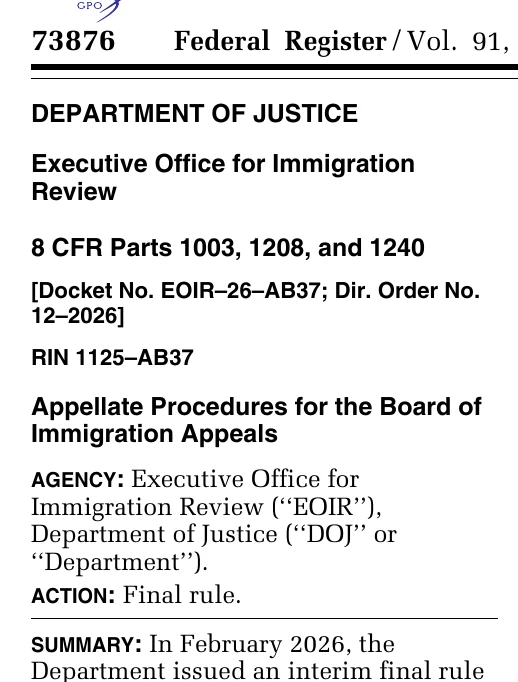
The Trump administration’s Justice Department has cut the time to file many appeals with the Board of Immigration Appeals (BIA) from 30 to 10 calendar days. The final rule was published November 17 and sets December 17, 2026, as its effective date. The cut affects the first step in challenging certain immigration judge decisions. For people trying to understand a ruling, find a lawyer, and prepare a notice of appeal, it takes away 20 days. Justice Department final rule
What changes after an immigration judge rules
The Board reviews immigration judge decisions and other administrative decisions within its jurisdiction. An appeal of an immigration judge decision begins with a notice, generally filed on Form EOIR-26. It identifies the decision and explains why the person filing believes the judge was wrong. Issues left out of that initial notice may be treated as waived under the rule. Cases that proceed to briefing have a later stage for written arguments. The first filing is what gets the appeal in the door. Official EOIR forms
The rule retains 30 days for certain cases involving asylum. The department says the longer deadline can cover the entire case when the judge adjudicated the asylum application and certain statutory bars, such as the one-year filing rule or an applicable third-country agreement, were not the grounds for denial. The applicable deadline depends on the decision, how and when it was issued, and the transition provisions. Final rule and discussion of the asylum exception
Timeline
- February 6, 2026. The Justice Department publishes an interim rule with the 10-day deadline and other changes to appeals. Interim rule
- March 8, 2026. A federal court in *Amica Center v. EOIR* sets aside three provisions of the interim rule, including the shorter deadline. The court examines the procedure the department used to adopt them. Court opinion
- April 8, 2026. The public comment period closes. The department responds to the comments in its final version. Rulemaking history
- November 17, 2026. The final rule is published. It sets December 17, 2026, as the effective date. Official notice
The efficiency claim and who bears the cost
The Justice Department says the changes can help the Board decide cases faster. It points to the large share of appeals that leave the immigration judge’s ruling in place and argues that filing the notice is feasible in 10 days because the parties submit full briefs later in cases that reach that stage. That is the case the government makes for cutting the clock. The department’s responses to public comments
What looks straightforward on a form can take much longer in detention. A person may have to arrange a phone call, get a copy of a ruling, or find a lawyer who can take the case. Someone who represented themselves still has to understand the reasons for the decision and put the objections in a filing. The Catholic Legal Immigration Network, which helps immigration legal-service providers, has flagged the changes as a high-impact development that calls for earlier planning. CLINIC field alert
That time matters for families too. They may be the ones gathering papers or connecting someone in custody with legal help. A rule designed around how quickly a form can be filed should account for how quickly people can reach the resources that make a meaningful filing possible. That gap deserves attention once the rule takes effect.
Pulso Demócrata analysis
The administration chose to move its docket faster by taking time away from the people facing the decisions. The public should be able to see how many appeals miss the new deadline, how the change affects people in detention, and how many cases receive meaningful review. A smaller backlog tells only part of that story.