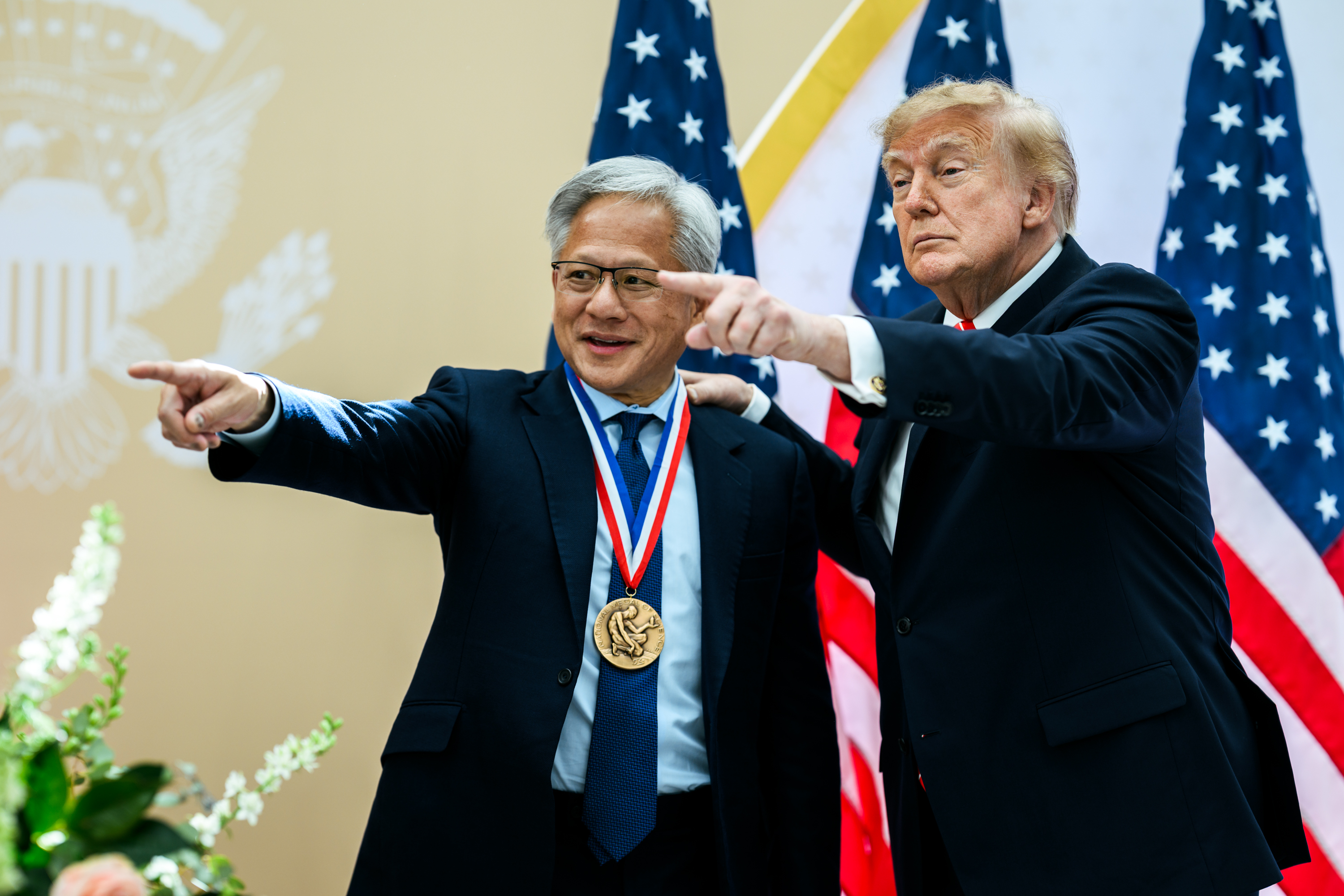
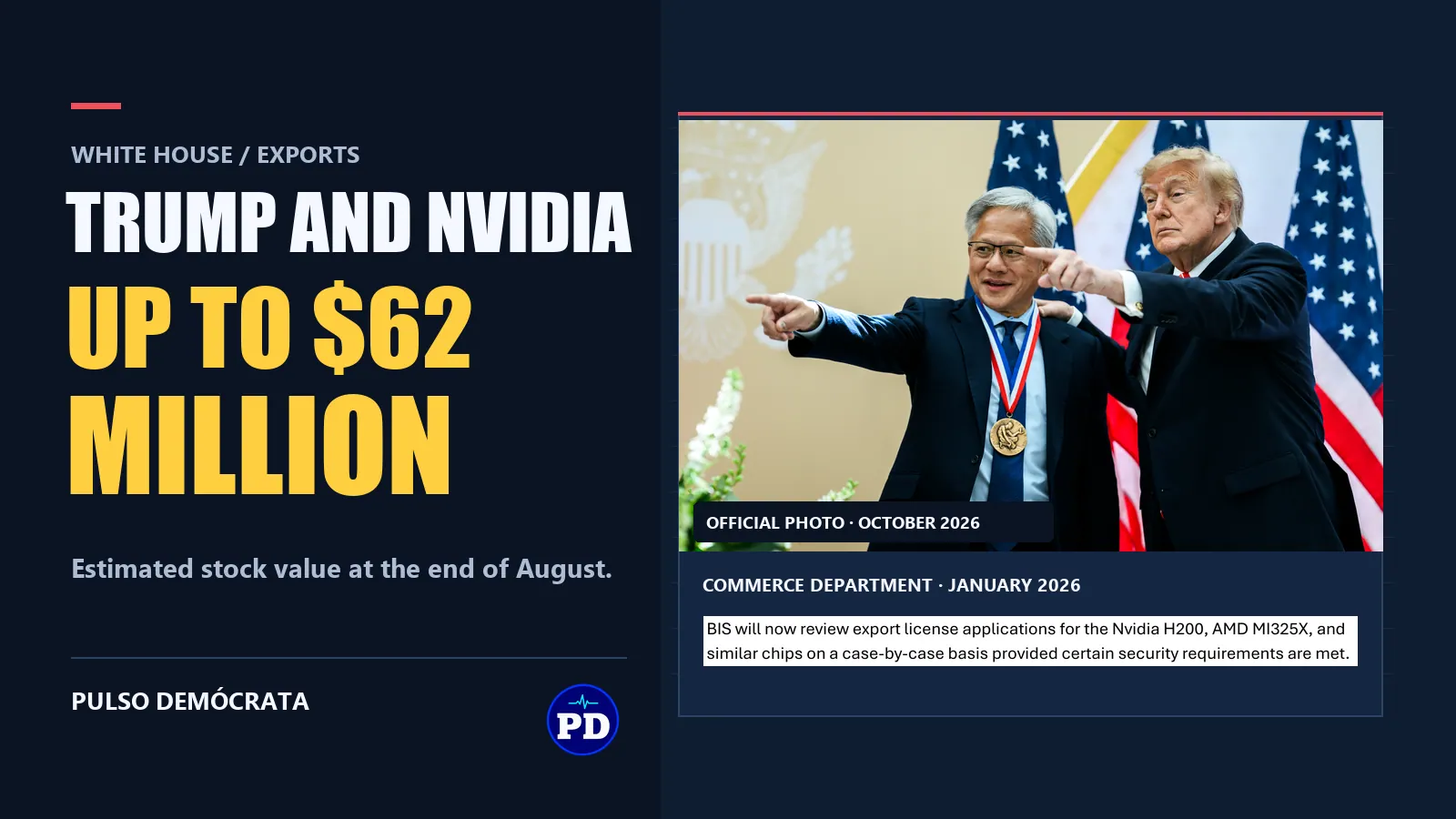
In October, Donald Trump awarded Jensen Huang the National Medal of Science. Trump already had a substantial financial stake in the company Huang led. At the end of August, Trump’s accounts held somewhere between $13 million and $62 million in Nvidia stock, The Washington Post estimated from his financial disclosures. Trump’s administration is responsible for deciding which of the company’s chips can be sold to buyers in China.
What the disclosures show
The estimate is for the end of August 2026. At the end of 2024, the Post put the value of Trump’s Nvidia holdings at between $615,000 and $1.3 million. The ranges reflect how the filings report transactions and the lag in disclosure. The $62 million figure is the upper end of the Post’s August estimate. The records reviewed for the story do not give an exact current value or show how much profit Trump may have realized from selling shares. The Office of Government Ethics publishes certified annual financial disclosures.
The White House told the Post that Trump does not pick or trade individual stocks and that independent managers make the investment decisions. That explanation leaves two separate questions. One concerns who decides when to buy or sell shares. The other concerns how much the president stands to gain or lose from official decisions affecting a company whose stock remains in his portfolio.
How Commerce decides which chips can go to China
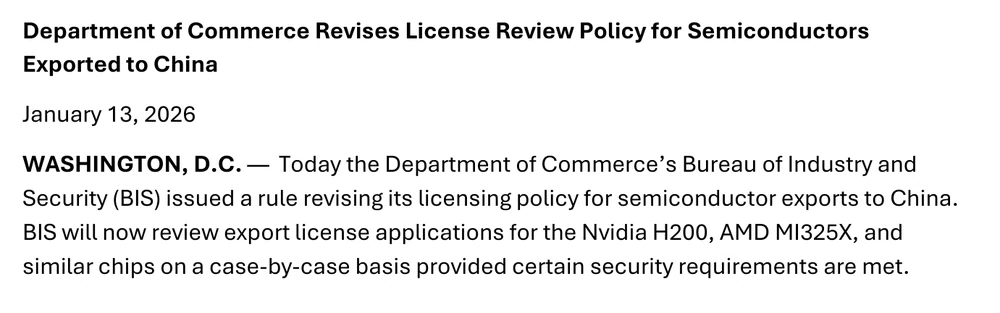
On January 13, the Commerce Department announced a case-by-case review for applications to export certain advanced chips to China, including Nvidia’s H200. The rule published in the Federal Register lays out conditions concerning supply for U.S. customers, buyer screening and independent testing. Meeting those conditions allows an application to be considered under the revised policy. The rule changes how Commerce reviews applications. It does not identify the individual buyers that received a license or the conditions attached to each approval. Those answers would come from the individual licensing records Congress has asked officials to preserve.
Commerce announced a separate rule on remote access in November. That rule addresses how users in restricted countries might access advanced computing capacity through data centers located elsewhere. Physical shipments and remote access raise related policy questions. The rules cover different transactions and each has its own text and timetable.
Huang left Nvidia and agreed to appear before Congress
Nvidia’s board accepted Huang’s resignation on November 11, effective immediately, according to the company’s Form 8-K filing with the SEC. Chief financial officer Colette Kress became interim CEO. The filing establishes the timing and the succession at the company.
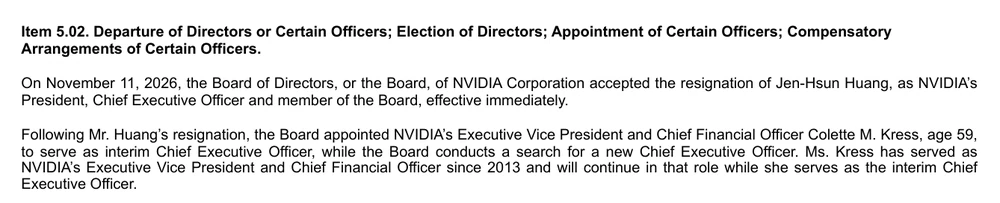
On November 17, three House committees announced that Huang and Nvidia’s general counsel had agreed to appear for transcribed interviews. Huang’s interview was set for December 1, followed by general counsel Tim Teter on December 2. Separately, Sens. Elizabeth Warren and Chris Coons asked officials to preserve records concerning Nvidia and export licenses. The interview announcement and document request show that oversight is underway. Neither supplies the findings of that inquiry.
What the White House should explain
Former Vice President Mike Pence called on Trump to put aside personal interests in Nvidia in the name of national security. Pence’s CNN interview. The question for the White House is the same even if outside managers handled every stock trade. What steps kept the president’s financial stake separate from his administration’s Nvidia decisions? Licensing records, contacts with the company and any written procedure for excluding interested officials would help answer that question. The overlap warrants scrutiny. The holdings figures alone do not prove that a government decision was made to benefit Trump.
The cover shows the October 8 medal ceremony. White House event statement and official photograph by Daniel Torok.
Timeline
- **Jan. 13, 2026.** The Commerce Department announces its review policy for H200 chip exports to China.
- **Nov. 11.** Nvidia’s board accepts Jensen Huang’s resignation, according to its Form 8-K.
- **Nov. 16 and 17.** An analysis of Trump’s assets is published and lawmakers announce Huang agreed to appear.