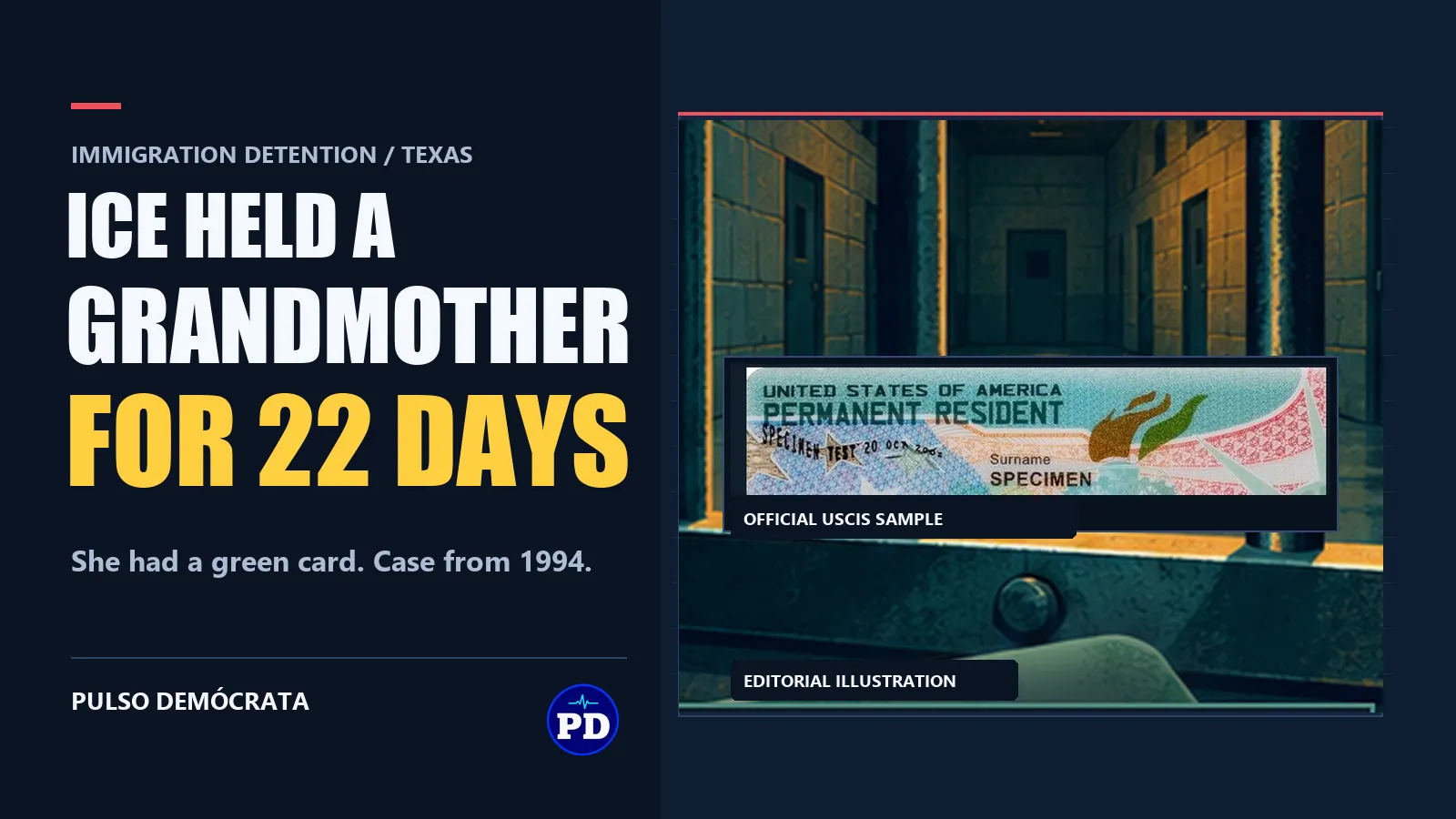
For decades, San Juanita Guerra crossed from Texas into Mexico to fill her prescriptions. When she came back through the Progreso port of entry on March 2, 2026, a case from 1994 caught up with her. She was 74 and had renewed her permanent resident card three times. ICE put her in shackles. She spent 22 days in detention, and her family borrowed $15,000 to get her out. The Washington Post reported her story on November 17.
A fingerprint check and a $15,000 bond
Guerra had left her card at home, the Post reported. Border officials took her fingerprints, and a daughter brought her paperwork to the crossing. The check turned up a 1994 weapons case. Guerra had pleaded guilty, paid a fine and served a short period of probation. The case was later dismissed. Her lawyer told the newspaper it had not prevented her from renewing her green card or crossing the border in the intervening years.

ICE officers shackled Guerra. Her family told the Post that she slept and ate poorly in detention and grew weaker. Her lawyer secured a bond hearing and an immigration judge allowed her release. Guerra initially went home with an ankle monitor, which was later removed after she raised health concerns. The Post reported another hearing was scheduled for later in November. Bond allowed her to return home while her case continued.
A second resident died in custody
On June 26, immigration officers detained 56-year-old Emiliano Andrade Covarrubias at a Laredo port of entry as he returned from Mexico. He had lived in Dallas for decades and also held a green card. He died on October 17 at the Rio Grande Processing Center after nearly four months in ICE custody. The Texas Tribune reported the agency’s account and the family’s response.
ICE said Andrade had failed to disclose a 2004 theft arrest while applying for residency and that the agency believed he had obtained his status fraudulently. His daughter, Estefani Andrade, said he had disclosed the arrest. County court records reviewed by the Post show he entered a no-contest plea, received deferred adjudication and finished probation. The records the paper reviewed did not show a conviction.
His family also disputes the care he received. His daughter said he told her about difficulty getting his medication and breathing problems during detention. ICE said he received appropriate medical care and that staff started lifesaving measures after finding him unresponsive. His daughter detailed her allegations in an interview with El País. The accounts of his medical care remain disputed, and neither account alone establishes his cause of death. Rep. Henry Cuellar visited the facility and sent questions to ICE. Local video coverage from KGNS in Laredo.
What the law allows at a port of entry
Federal law generally treats lawful permanent residents returning from temporary travel as already admitted to the country. There are specified exceptions, including for certain offenses. In June, the Supreme Court ruled in Blanche v. Lau that the government could present evidence for the relevant exception at a removal hearing without first meeting the clear-and-convincing standard at the port of entry. The court addressed when the government has to present that evidence. The facts and records of a specific case still matter.

For Guerra, a border check meant 22 days away from home and thousands of dollars in family debt. Andrade died while waiting for a hearing that, according to the Tribune, had been scheduled for November 2. The government owes the families an account of the legal grounds it invoked, why it considered custody necessary and what medical care Andrade received before he died.
The cover uses an official USCIS sample permanent resident card in an editorial composition.
Timeline
- **1994.** The old case later cited in San Juanita Guerra’s detention is recorded.
- **March 2, 2026.** Guerra is detained upon returning from Mexico through a Texas border crossing.
- **Nov. 17.** The Washington Post publishes its investigation of detentions of permanent residents.