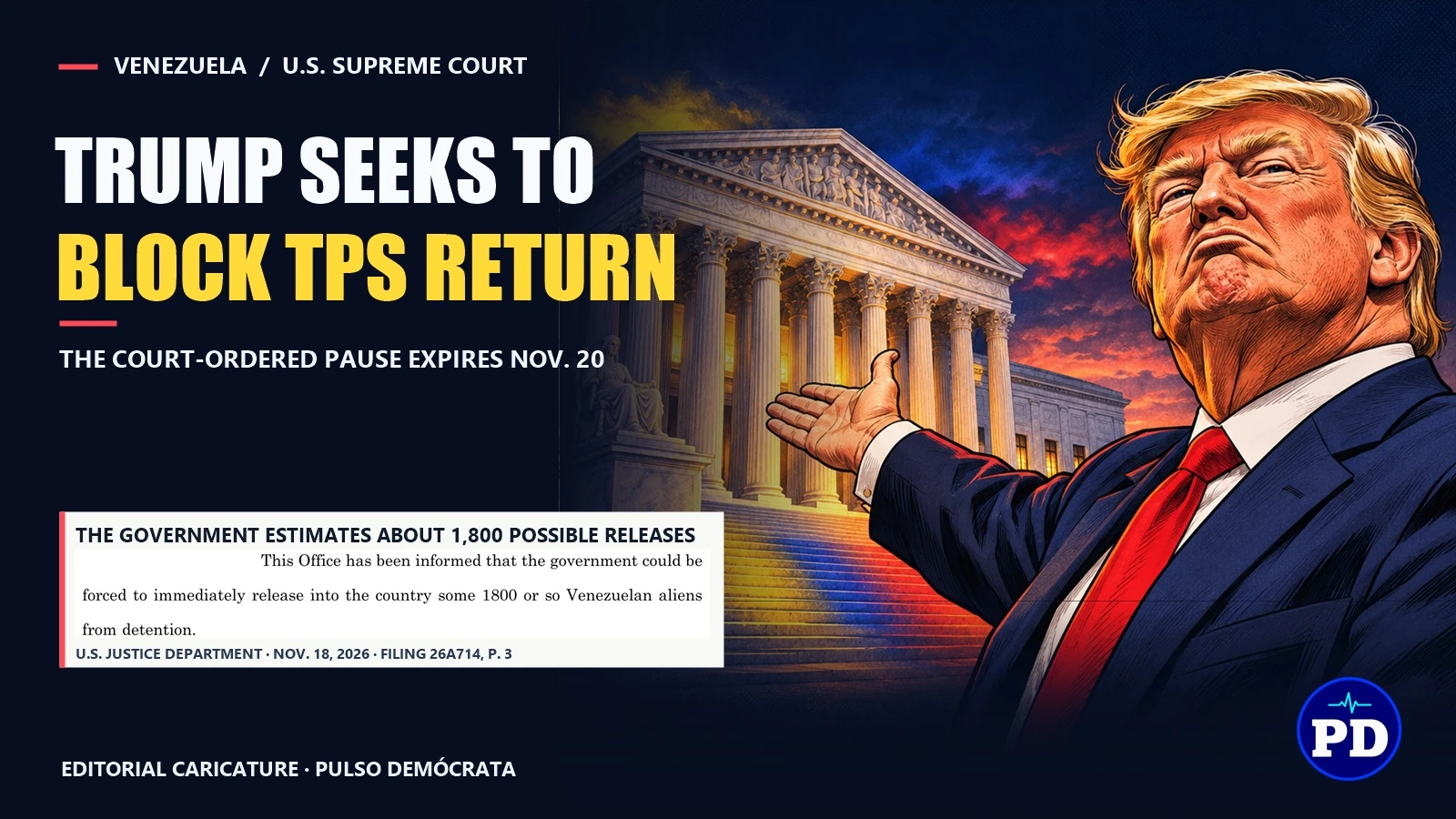
The Trump administration asked the U.S. Supreme Court on Wednesday, Nov. 18, to keep on hold a federal ruling that would restore Temporary Protected Status (TPS) for Venezuelans covered by the 2023 designation. The emergency application was submitted to Justice Elena Kagan in case 26A714. As of Nov. 18, the public docket showed no order on the new request.
The next deadline is Friday, Nov. 20. The Ninth Circuit’s 14-day administrative stay is due to expire that day unless a court extends it or issues a new order. The administration is seeking an immediate pause while the Supreme Court considers the application, followed by a longer stay while the appeal proceeds. Ninth Circuit order, page 5.

Why the administration says it needs emergency relief
U.S. Solicitor General D. John Sauer argued that if the ruling takes effect, the administration could have to release about **1,800 Venezuelans from detention** and would be unable to carry out up to **332 final removal orders** in the near term. He also argued that the government would have to resume issuing work authorizations. The figures are the administration’s estimates of what could happen if TPS returns and form part of its case for immediate intervention. Emergency application, pages 3 and 21.

The administration also argues that *Mullin v. Doe* bars courts from reviewing nonconstitutional challenges to a TPS termination. The Ninth Circuit still has to reconsider how that precedent applies to this case. Emergency application, pages 15–18 · Case 26-48.
What is at stake for families
The federal TPS statute provides eligible beneficiaries temporary protection from removal and authorization to work while the status is in effect. It also limits detention based solely on immigration status. The Nov. 18 application focuses on Venezuela’s **2023 designation**. What the litigation means for an individual depends on eligibility and which court order is in effect.
Lawyers for TPS holders, including a team from UCLA, say the loss of protection has already resulted in deportations and family separations. In a declaration submitted to the court, Carlos Sanchez Villa said he was deported to Liberia in August 2026 and separated from his wife and children in the United States. His account illustrates the consequences the plaintiffs are asking the court to consider. Statement from the legal team.
Timeline
- **Sept. 5, 2025.** U.S. District Judge Edward Chen rules against both the termination and the rescission of an extension of Venezuelan TPS. District court ruling.
- **Oct. 5, 2026.** The Supreme Court vacates the Ninth Circuit’s earlier judgment and sends the case back for reconsideration in light of *Mullin v. Doe*. Case 26-48.
- **Nov. 3 and 6, 2026.** The Ninth Circuit orders a 14-day administrative stay running from Nov. 6. Nov. 3 order.
- **Nov. 18, 2026.** The administration submits its new emergency request to the Supreme Court. Case 26A714.
- **Nov. 20, 2026.** Scheduled expiration of the pause, subject to any new order. Government application, page 14.
Pulso Demócrata analysis
The administration wants the court to treat the prospect of releasing people from detention and restoring their right to work as an emergency. Families have already lived with months of uncertainty. If the administration wants to extend the pause, it owes those families an explanation of why they should keep bearing the cost while its appeal goes forward.